Introduction
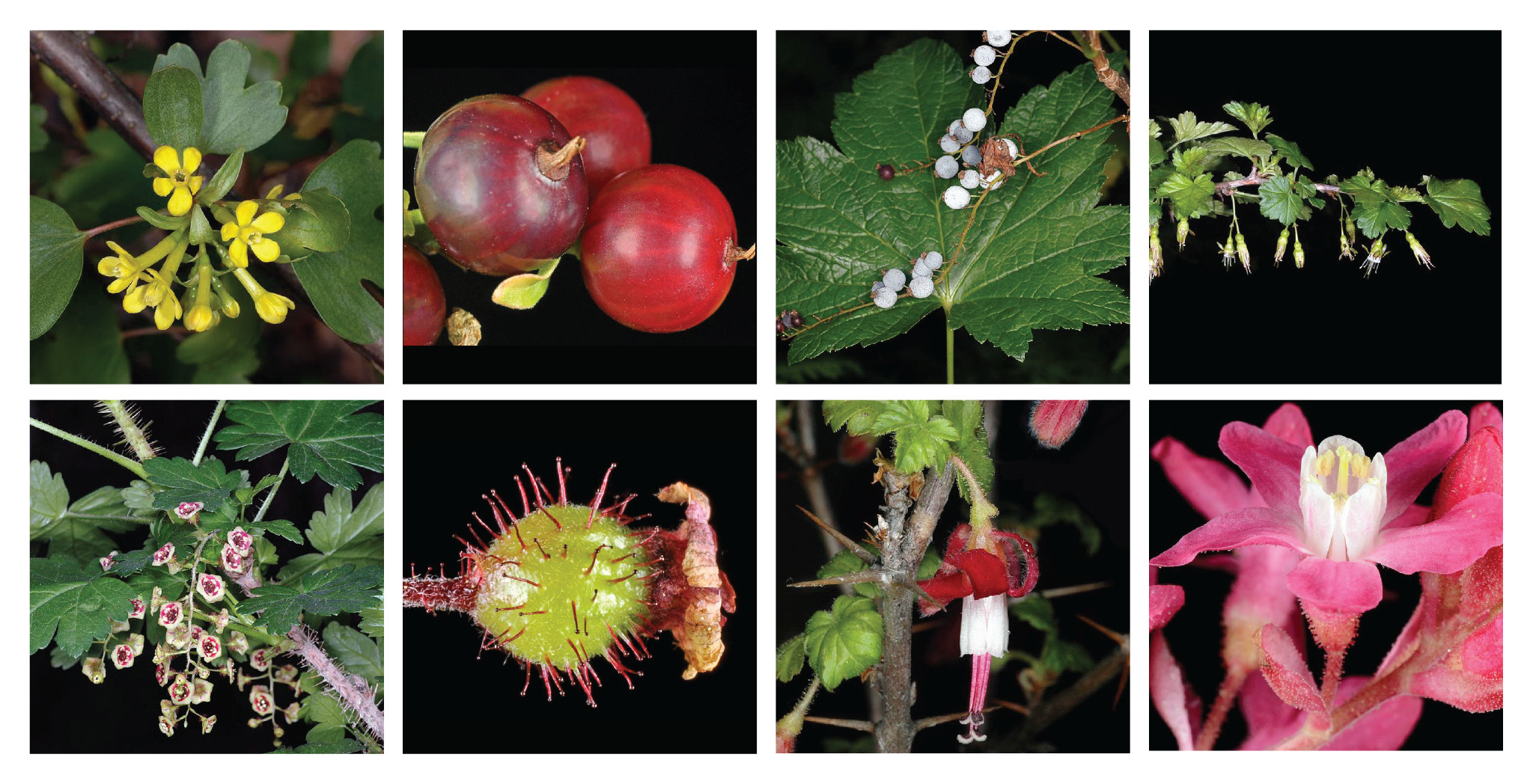
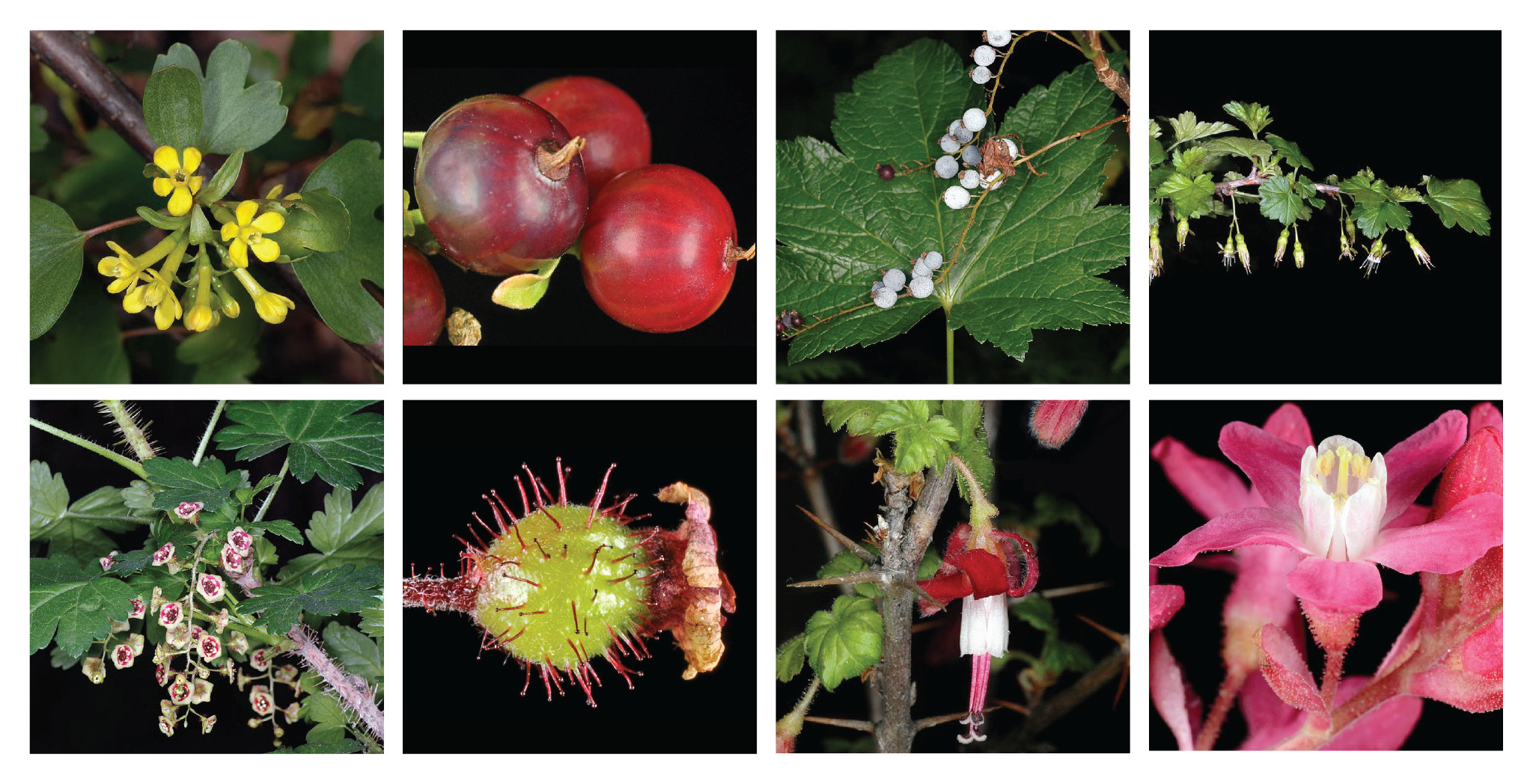
Ribes L. (currants and gooseberries) are a diverse genus of around 150 species of temperate shrubs in the Grossulariaceae (Figure 1). The berries of many species—such as blackcurrant, redcurrant, and the European gooseberry—are edible and have horticultural and economic significance (Hummer and Dale 2010). However, the cultivation of Ribes is controlled, especially in the United States, because many species of Ribes are an alternative host for the devastating white pine blister rust (Cronartium ribicola J.C.Fischer; Geils et al. 2010). Despite its economic importance, very few genomic resources have been developed until recently, and the few resources available are focused on the cultivated taxa, while the wild relatives of these crops remain understudied. Ziegler et al. (2025) published a chromosome level assembly of blackcurrant (Ribes nigrum), Ruhsam et al. (2026) published a chromosome level assembly of European gooseberry (Ribes uva-crispa), and the Canadian BioGenome project recently produced an annotated genome of Red Flowering Currant (Ribes sanguineum). In this study, we contribute additional genomic resources by sequencing and assembling genomes for 58 species that span the diversity of the genus, including sampling across all recognized subgenera and most recognized sections.
Methods
Tissues were sampled from herbarium specimens of three institutions: the Missouri Botanical Garden (MO), the University of Washington Herbarium (WTU), and the Field Museum Herbarium (F). The sampling aimed to represent the geographic span, morphological distribution and previously recognized subgenera and sections. For each specimen, we collected one to three leaves depending on their size. DNA extraction was performed using a DNEasy genomic extraction kit (Qiagen, Redwood City, CA) using the standard process. Paired-end sequencing libraries were constructed using a TruSeq kit (Illumina, San Diego, CA) according to the manufacturer’s instructions. The libraries were sequenced on an Illumina Hi-Seq platform in paired-end, 2 × 150bp format. The resulting fastq files were trimmed of adapter/primer sequences and low-quality regions with Trimmomatic v0.33 (Bolger et al. 2014). The trimmed sequence was assembled by SPAdes v3.15.4 (Bankevich et al. 2012) followed by a finishing step using Zanfona (Kieras et al. 2021).
Results and Data Availability
Taxa and data can be found in Table 1. Genomes were successfully assembled despite various specimen ages (1979–2025) and methods of preservation (silica-dried tissue or herbarium-sampled material). The median age of the herbarium specimens sampled was 16 years old and the average age was 17 years old. Most specimens were not preserved using silica drying. Five samples did not pass quality checks for assembly and are not included here. These samples fell within the age and preservation method variation of the successful taxa, and their failure appears to have been stochastic. Both the fact that the sequencing failure seemed to be random, and the fact that the sequencing quality of silica-dried material and herbarium sampled tissue are comparable, should be seen with optimism for future museomic (Davis and Knapp 2025) work on this group. This study is just one of many examples of the importance of biodiversity museums, not only as places to document past and current biodiversity, but as a pillar of modern biological research.
Funding
Funding was provided by Iridian Genomes, grant# IRGEN_RG_2021-1345 Genomic Studies of Eukaryotic Taxa.
Acknowledgements
We would like to thank the University of Washington Herbarium (WTU), the Field Museum Herbarium (F), and The Missouri Botanical Garden’s Herbarium (MO) for providing the specimens sampled in this study. We would also like to acknowledge the Burke Museum Image Collection and the photography of Gerald D. Carr.