Introduction
Catopsis is a genus of entirely epiphytic bromeliads (family Bromeliaceae) distributed throughout southern Mexico, Central America, the Caribbean, and northern South America. Species occupy diverse habitats ranging from cloud forests and mangroves to seasonally dry forests, with plants that are characterized by their funnel-shaped to tubular rosettes, hyaline leaf margins, and seeds bearing comose appendages attached to the apex (Smith and Downs 1977). Phylogenetic studies have resolved Catopsis as sister to the remaining lineages of Tillandsioideae, placing the genus in a pivotal position for understanding the evolutionary history of the subfamily and its position within the Bromeliaceae (Barfuss et al. 2016).
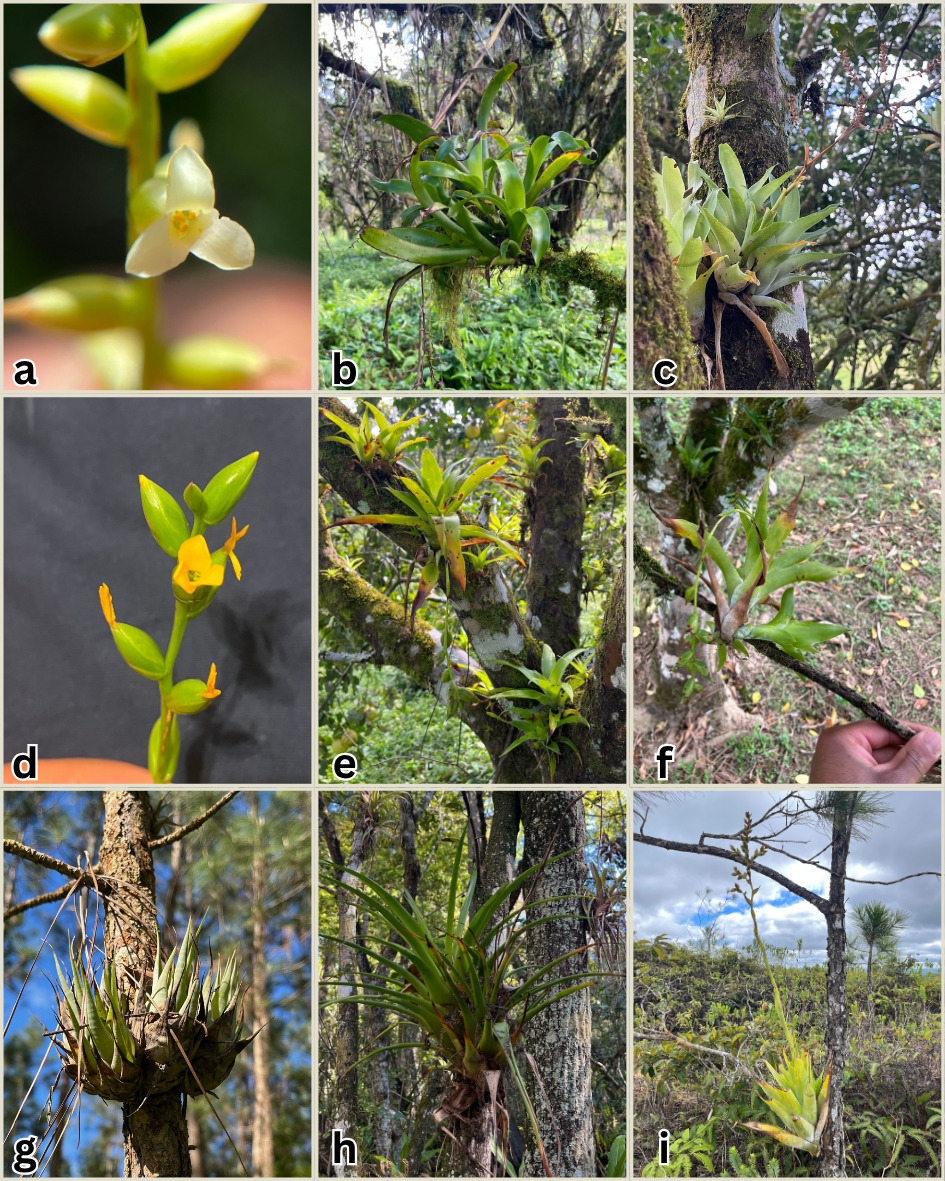
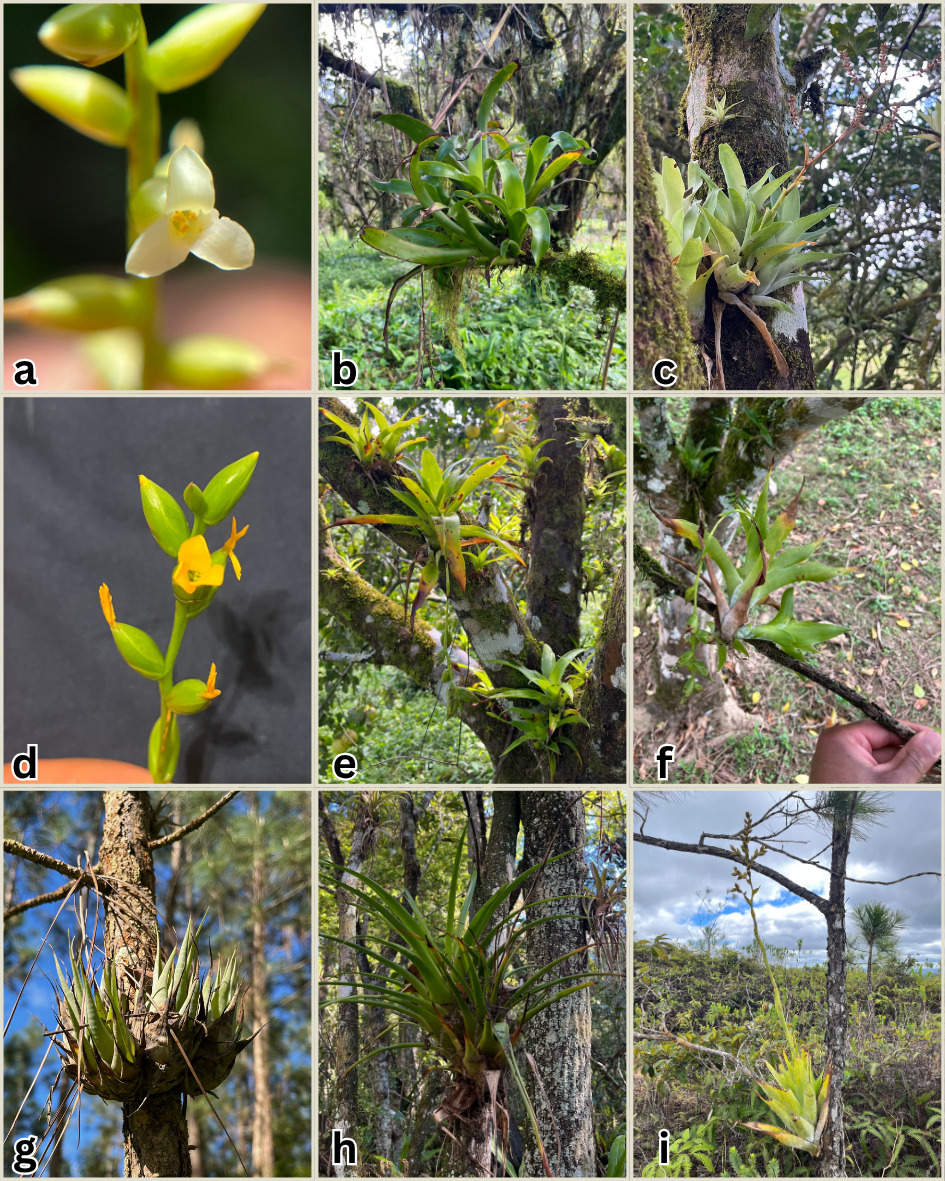
Several species exhibit unusual ecological and reproductive traits that have attracted longstanding interest. Most notably, C. berteroniana (Schult. & Schult.f.) Mez is considered protocarnivorous, relying on UV-reflective epicuticular waxes to disorient and trap flying insects, a nutritional strategy linked to the phosphorus- and potassium-poor conditions of its exposed epiphytic habitat (Gonsiska 2010; Benzing 2023). Reproductive systems within Catopsis are unusually diverse, with approximately half of the species reported as dioecious and the remainder possessing bisexual flowers (Benzing 2000). Despite the distinctive reproductive biology in Catopsis, genomic resources for the genus remain scarce. Here, we present genome assemblies for 13 species: C. delicatula L.B.Sm., C. floribunda (Brongn.) L.B.Sm., C. juncifolia Mez & Wercklé, C. micrantha L.B.Sm., C. minimiflora Matuda, C. morreniana Mez, C. nitida Griseb., C. nutans Griseb., C. occulta Mart.-Correa, Espejo & López-Ferr., C. paniculata hort. ex Gentil, C. pisiformis Rauh, C. sessiliflora Mez, and C. wangerinii Mez & Werklé (Figure 1), representing the most comprehensive genomic sampling of the genus to date.
Methods
Leaves from herbarium vouchers were used for DNA extraction and sequencing, using approximately 10-15 mg of leaf tissue per extraction. Each DNA extraction was performed using the Qiagen DNEasy genomic extraction kit using the manufacturer’s protocol. Paired-end sequencing libraries were constructed using the Illumina TruSeq kit according to the manufacturer’s instructions. Libraries were sequenced on an Illumina Hi-Seq platform in paired-end, 2 × 150bp format. The resulting fastq files were trimmed of adapter/primer sequences and low-quality regions with Trimmomatic v0.33 (Bolger et al. 2014). The trimmed sequences were assembled by SPAdes v3.15.4 (Bankevich et al. 2012), screened for foreign contaminants with FCS (Astashyn et al. 2024), followed by a finishing step using Zanfona (Kieras et al. 2021) to scaffold newly generated assemblies based on available genomes from related species. Raw sequencing reads were uploaded to the Sequence Read Archive.
Results and Data Availability
Sequencing files and scaffolded genome assemblies are available on NCBI with the accession numbers listed in Table 1.
Funding
Funding was provided by Iridian Genomes, grant # IRGEN_RG_2021-1345 Genomic Studies of Eukaryotic Taxa. JMF was supported by the National Science Foundation Graduate Research Fellowship under Grant No. 2139899
Acknowledgements
We thank the M. C. Pace and J. K. Teisher of the New York Botanical Garden and Missouri Botanical Garden for granting permission to sample specimens from their collections.