Loading [Contrib]/a11y/accessibility-menu.js

This website uses cookies

We use cookies to enhance your experience and support COUNTER Metrics for transparent reporting of readership statistics. Cookie data is not sold to third parties or used for marketing purposes.

Skip to main content
biogenomes
  • Menu
  • Articles
    • Genome Sequencing
    • All
  • For Authors
  • Editorial Board
  • About
  • Open Access
  • Peer Review
  • search
  • RSS feed (opens a modal with a link to feed)

RSS Feed

Enter the URL below into your favorite RSS reader.

https://biodiversitygenomes.scholasticahq.com/feed
ISSN 2687-7945
Genome Sequencing
March 24, 2026 EDT

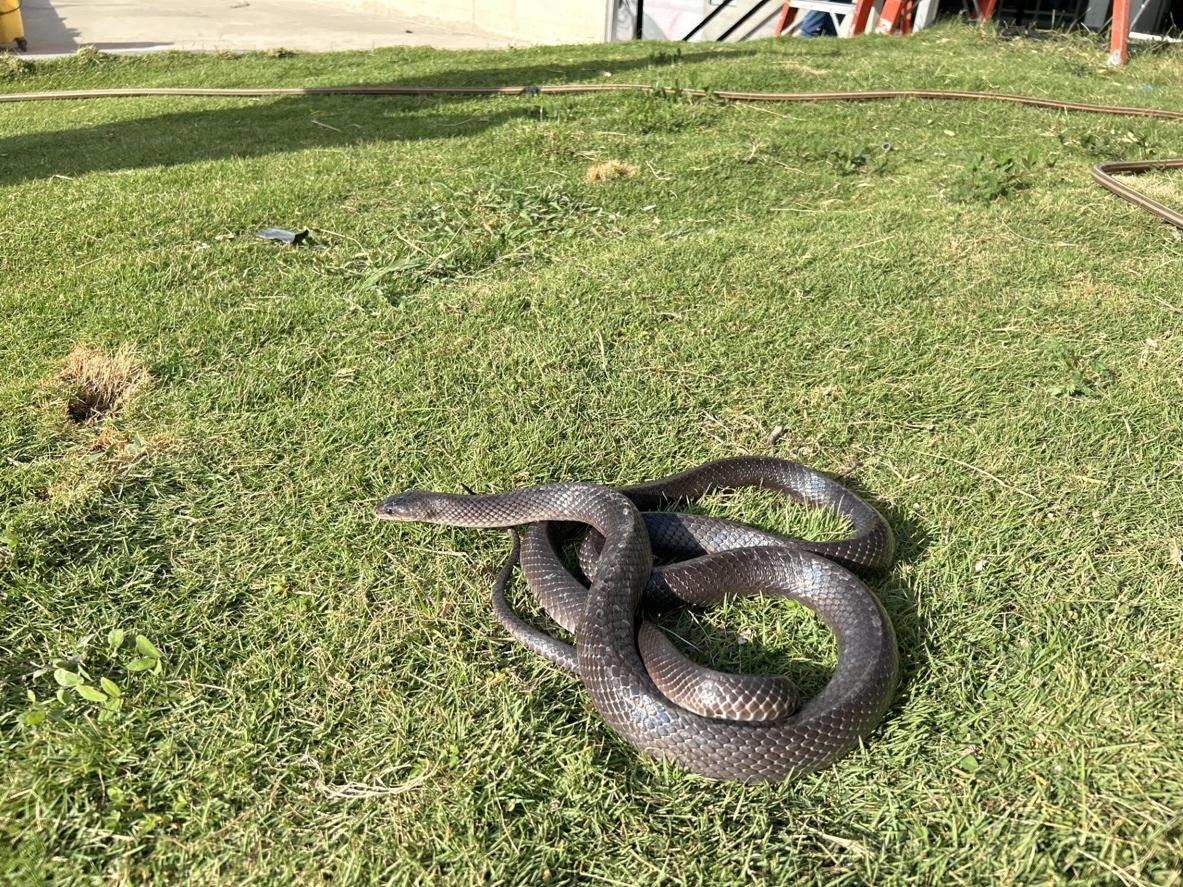
The Complete Genome Sequence of the Black Mussurana snake (Clelia clelia)

Teddy Angarita-Sierra, Paola Pulido-Santacruz, Stacy Pirro, Santiago J. Sánchez-Pacheco,
https://doi.org/10.56179/001c.159379
biogenomes
Angarita-Sierra, Teddy, Paola Pulido-Santacruz, Stacy Pirro, and Santiago J. Sánchez-Pacheco. 2026. “The Complete Genome Sequence of the Black Mussurana Snake (Clelia Clelia).” Biodiversity Genomes, March 24. https://doi.org/10.56179/001c.159379.
Download all (1)
  • Download

Error

Sorry, something went wrong. Please try again.

If this problem reoccurs, please contact Scholastica Support

Error message:

undefined

View more stats

Abstract

We present a complete genome sequence of the Black Mussurana, Clelia clelia (Reptilia: Squamata), a non-venomous neotropical colubrid snake that exhibits resistance to the bites of venomous Viperidae snakes.

Methods

A blood sample was collected from a healthy adult male Clelia clelia (voucher specimen UNP-S 061), which is currently kept alive at the Universidad Nacional de Colombia, Sede de La Paz. The specimen was collected at Finca La Palestina, vereda caño Padilla, Corregimiento de Media Luna, municipality of San Diego, Cesar (Colombia). Elevation: 672 m.a.s.l.; Latitude 10,27181Nº; Longitude -73,09733Wº.

Data availability

taxname accession
Clelia clelia PRJNA1313324

Funding

Funding was provided by Iridian Genomes, grant# IRGEN_RG_2021-1345 Genomic Studies of Eukaryotic Taxa.

Acknowledgments

Isabela Serna Chavarría (UDES) assisted in obtaining the blood sample for DNA. Fieldwork was performed under the scientific research permit for collection of wild specimens of biological diversity for non-commercial purpose issued by the Colombian Ministry of Environment and Sustainable development by agreement 00698 (5 April 2023). This study was conducted following the Colombian animal welfare law and the collection of wild specimens of the biological diversity acts (Ley 1774, 2016; Decreto 1376, 2013), as well as considering the Universal Declaration on Animal Welfare (UDAW) endorsed by Colombia in 2007. The sample was exported for sequencing under export permit No. 48160 issued by the Ministry of Environment and Sustainable Development of Colombia.

Photo
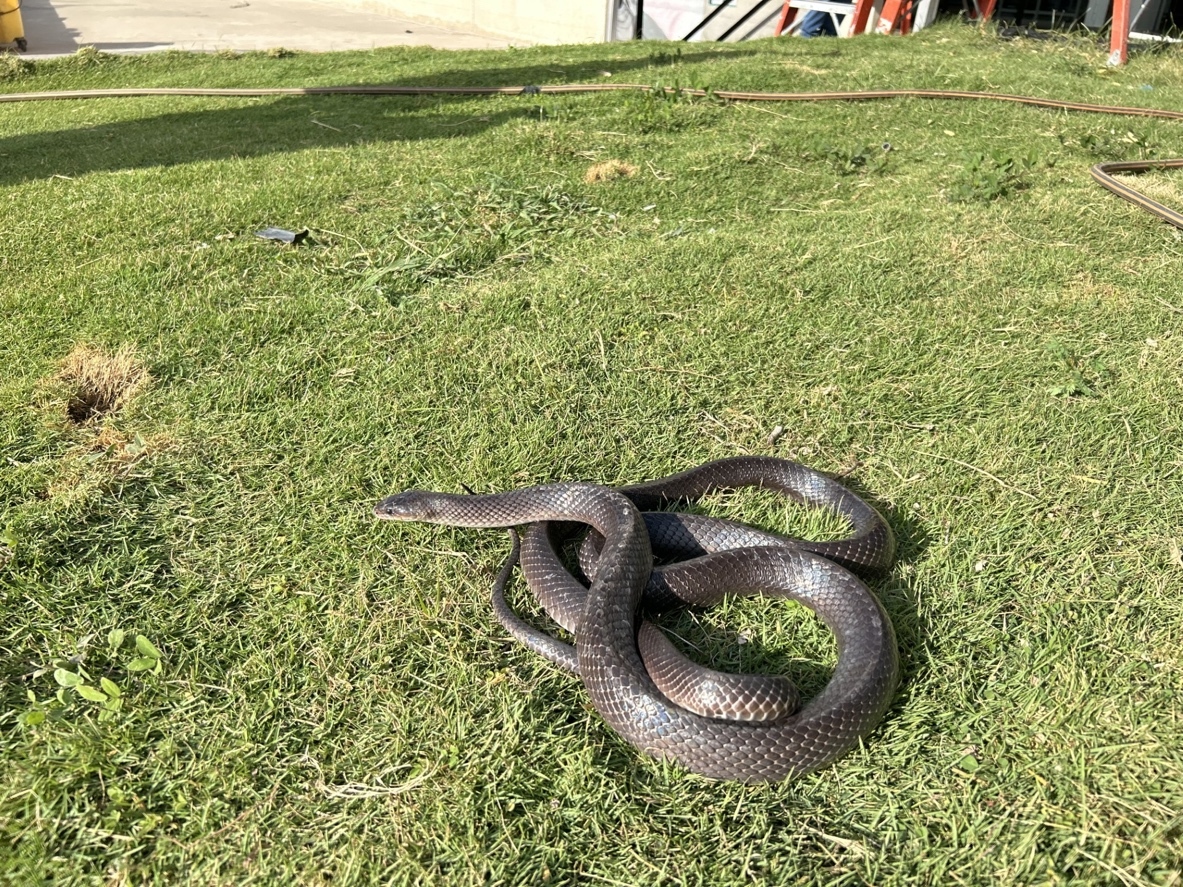
Photo taken by Vicente Lopez.

Submitted: March 22, 2026 EDT

Accepted: March 24, 2026 EDT

References

Bankevich, Anton, Sergey Nurk, Dmitry Antipov, et al. 2012. “SPAdes: A New Genome Assembly Algorithm and Its Applications to Single-Cell Sequencing.” Journal of Computational Biology, ahead of print. https:/​/​doi.org/​10.1089/​cmb.2012.0021.
Google ScholarPubMed CentralPubMed
Bolger, Anthony M., Marc Lohse, and Bjoern Usadel. 2014. “Trimmomatic: A Flexible Trimmer for Illumina Sequence Data.” Bioinformatics 30 (15): 2114–20. https:/​/​doi.org/​10.1093/​bioinformatics/​btu170.
Google Scholar
Kieras, M., K. O’Neill, and S. Pirro. 2021. “Zanfona, a Genome Assembly Finishing Tool for Paired-End Illumina Reads.” https:/​/​github.com/​zanfona734/​zanfona.

Attachments

Powered by Scholastica, the modern academic journal management system